Why Mold Testing Is Important
Mold growth and elevated airborne mold spores can sometimes be associated with moisture-related conditions that are not readily visible.
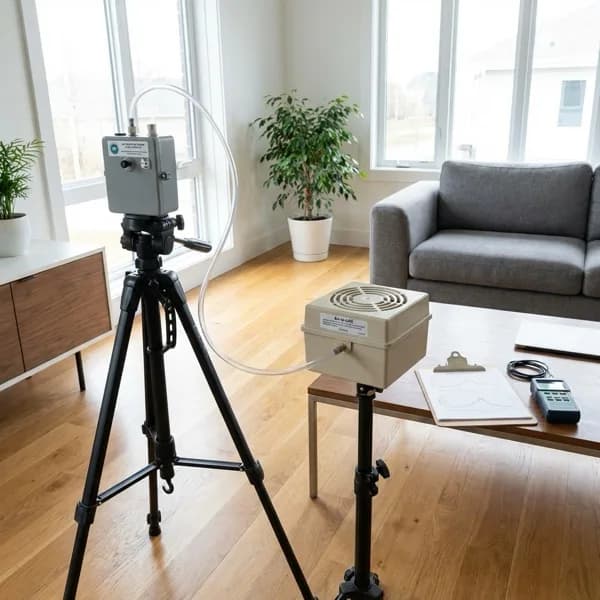
Professional mold air sampling provides laboratory data that can help determine whether indoor mold spore levels or types differ significantly from outdoor conditions. This information can help buyers and homeowners make informed decisions regarding additional investigation or corrective action when warranted.
Common Conditions Associated With Mold Growth
- Roof or exterior water intrusion
- Plumbing leaks
- Basement or crawlspace moisture
- Elevated indoor humidity
- HVAC condensation or drainage issues
- Poor ventilation or prolonged damp conditions
How Mold Air Sampling Works
- Air samples are collected from selected areas inside the home.
- An outdoor control sample is collected for comparison.
- Samples are submitted to a qualified laboratory for analysis.
- The laboratory identifies mold spore types and concentrations.
- A detailed laboratory report is provided with the sampling results.
What You Receive
✓ Professional indoor air sampling
✓ Outdoor control sample for comparison
✓ Certified laboratory analysis
✓ Identification of detected mold spore types and concentrations
✓ Detailed laboratory report
✓ Recommendations for further evaluation when conditions warrant
When Mold Air Sampling May Be Recommended
- Visible or suspected mold-like growth
- Evidence of past or current moisture intrusion
- Musty or unusual odors
- Staining or moisture-related damage
- After a known water intrusion event
- When additional information about indoor airborne mold conditions is desired