Why Chimney Scans Are Important
- Many chimney defects are hidden inside the flue
- Cracked or damaged liners may create potential safety concerns
- Older masonry chimneys may deteriorate over time
- Internal defects may not be visible from the fireplace or roof
- Chimney repairs can become costly depending on the extent of damage
- Identifying concerns before closing helps buyers make informed decisions
How the Chimney Scan Works
- Inspect the accessible fireplace and chimney components
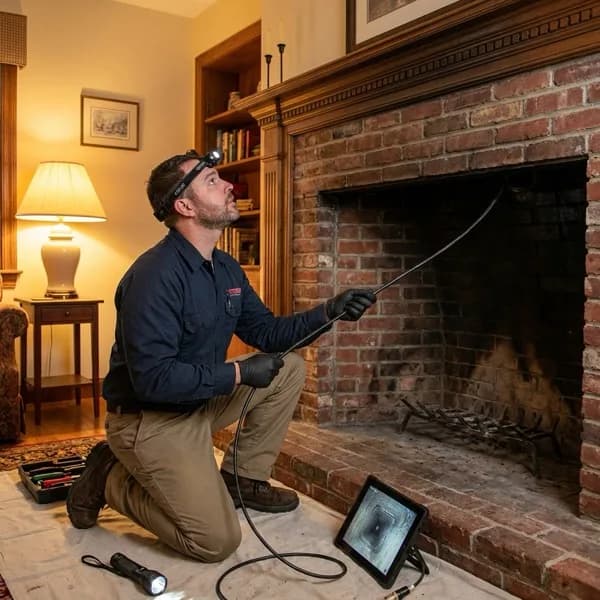
- Insert a specialized chimney camera into the accessible flue
- Scan accessible interior portions of the flue
- Look for visible cracks, gaps, deterioration, obstructions, and other concerns
- Document significant findings with photos and/or video in your inspection report
A standard home inspection evaluates the readily accessible and visible portions of the fireplace and chimney. However, many important components are located inside the chimney flue and cannot be adequately viewed without specialized equipment.
A chimney camera scan provides an enhanced visual evaluation of accessible interior flue surfaces and can help identify cracks, deterioration, gaps, or other visible conditions that may warrant repair or further evaluation by a qualified chimney professional.
What You Receive
✓ Camera scan of accessible interior flue areas
✓ Photos and/or video of significant findings
✓ Findings documented in your home inspection report
✓ Clear recommendations when further evaluation or repairs are needed
A Chimney Scan Is Recommended For:
- Homes with wood-burning fireplaces
- Older homes with masonry chimneys
- Chimneys with clay tile flue liners
- Fireplaces with an unknown maintenance or inspection history
- Chimneys showing visible deterioration or other concerns
- Home buyers who want a closer evaluation of the chimney before closing